Showing posts with label Email Debates. Show all posts

Wednesday, July 4, 2012

CR 4TH OF JULY EDITION: 5 GREATEST MOMENTS IN AMERICAN HISTORY


A quick post this morning before everyone gets on with their 4th of July celebrations.  With America's mid-summer FESTIVAL OF FREEDOM occurring this year on a Wednesday, time is of the essence.  At least everyone agrees that Thursday, July 5, 2012 will be among the least productive days of the year.

Stephen and I may have our political differences, but as a band of one hit wonders once said, our mutual love for America is like a river running soul deep.  In preparation for the 236th anniversary of our Declaration of Independence, we're ranking our top five favorite moments in American history.

These are issued with the qualifier that there was an incomprehensible amount to choose from in this assessment, so while I can't speak for Stephen, my list may be at least as reflective of the first five things that came to my head as it is of a carefully chosen five greatest moments. 
Without further adieu, then, counting down our five greatest moments:   

(5) 

Stephen: US victory over the Axis in WWII - triumph of freedom over fascism

Matt: Going a bit more unconventional with this one, because the Miracle on Ice deserves to be on here somewhere.  If there is one sports victory that symbolizes the story of America, it's the hockey triumph of a team of unheralded amateur Americans over the heavily-favored Russians in the 1980 Olympics.  That the game was in the dregs of the Cold War and had geopolitical significance, even only superficially, makes it all the better.

(4)

Stephen: Manifest Destiny.  The exploration and conquering of the West.

Matt: Building of the railroads, preceded by the building of the canals.  America's first major infrastructure projects, which set the stage for the United States to become an industrial powerhouse.

(3)

Stephen: "We hold these truths to be self evident" - the signing of the Declaration of Independence, and accompanying revolt of a small band of colonists against one of the greatest empires in the history of the world.  From day one it seemed nearly inevitable that this nation would be powerful, if just by the willpower of its people.

Matt: The progressive reform, women's suffrage, and civil rights movements of the 20th century. We've got more work to do, but the task of making good on America's political and economic promises began here.

(2)

Stephen: "One small step" - the NASA moon landing

Matt: Have to agree with Steve here, in addition to a psychological victory over the Soviet Union, the Space Race heralded unprecedented technological advances that remain with us today, including my #1...

(1) 

Stephen: "Mr Gorbachev tear down this wall" the winning of the Cold War, proving economic and political freedom > communism

Matt: The invention of the internet, right here in the United States.  No other modern invention has had such a political, cultural, and economic impact on the world, all while bringing people closer together than ever before.  

If there's something you think we left off the list, be sure to tell us all about it in the comments.   Wherever you are today, be sure to celebrate our great country - if you're looking for a little bit of musical Americana, I would recommend looking no further than one Ray Charles...

Happy Independence Day.

Thursday, June 28, 2012

Rapid Reax: Supreme Court Upholds Obamacare

It's a great day for individual responsibility, as the Supreme Court held this morning that the individual health care mandate, and most of the rest of President Obama's 2010 health care law, is in fact constitutional.  Somewhere, the pre-2008 edition of the cyborg known by his friends as Mitt Romney is rejoicing. 

The blogosphere is abuzz with reaction to the decision, and Stephen and Matt joined in by engaging in a bit of pre-emptive sniping on Twitter this morning.  Here's a sampling:


I know, I know.  But if that was exhausting to read, just imagine how difficult it was to take so many screen shots. 

More reaction to come, along with some court analysis from CR Chief Legal Correspondent Stephen DeGenaro, who Conflict Revolution enthusiasts may remember wrote this recap of the oral arguments on the health care case in March. 

Stay safe out there folks, and watch out for the job killers.  Now that Obamacare is constitutional, they're everywhere...

Tuesday, June 26, 2012

Email Debate: Paper or Plastic?

When Stephen saw a study on his favorite blog purporting to show that the production of plastic bags generated fewer carbon emissions than their reusable counterparts, and that it would take up to 131 reuses of said reusable bag to make for the increased carbon emissions it took to produce it, his eyes lit up.  Had he finally found the noble sword to drive into the stone that his longtime scourge called a heart?  Sure, we may be talking about environmentalists, who care about things like clean water and sea turtles.  But after many years of doing battle with Matt - Mr. Eco-Action - on issues related to environmental protection, Steve sensed he may have found the knockout punch he so craved.  A lively debate ensued:


Stephen: Matt, in light of this study, will you join in me in saying the environmentalist crowd has gotten this one wrong? 

Matt: The article you linked is simplistic at best, and the dumbest thing I've ever read at worst.  First, their measure of "better for the environment" is extremely narrow - the study measures carbon emissions but says nothing about waste.  The carbon emissions finding is insightful, for sure, and should make people think twice before they reflexively assume a "reusable" bag has no impact.  But the article says nothing about plastic bags ending up in landfills or waterways.  Does that not impact the environment?  The DC bag tax, which I assume you don't support, wasn't created as a high-minded local solution to global warming... they did it to keep plastic bags from ending up in the Anacostia River.  Alternatively, have you ever heard of the Great Pacific Garbage Patch

Despite the scorn with which you and the author to this article refer to the "environmentalist crowd," you've taken a simplistic study and used it to justify a wasteful status quo and then beat your chest about it.  The biggest problem with plastic bags isn't that they exist, it's that they are overused and then wasted.  The best thing anyone can do for the environment is use less, and in a country that values thrift when it comes to our economic decisions, I've never understood why some people look down on the idea that we shouldn't waste our other resources.

Read Stephen's response after the jump...

Friday, June 8, 2012

CR Sports: Tradition and the Mets

For all of Stephen and Matt's disagreements, there is only one that so strongly divides an entire city and parts of three full states.  While that second part of that statement may or may not actually be true, I'm obviously talking about the Mets/Yankees crosstown rivalry.  With the first of the two teams' annual meetings set to take place tonight, Matt and Stephen decided to dissect which offered more compelling reasons for fanhood. 

Earlier today Stephen offered a tradition-based justification for being a Yankees fan.  Matt now gives his take on the joy, or something, of rooting for the Mets:

CLICK HERE FOR PART I

Posted by Matt:

Ah, tradition.  The great thing about tradition is that it takes many forms.  In the most simplistic, and perhaps most conventional, reading of the word tradition, the Yankees do indeed have much more to brag about than the Mets.  The 27 championships, the '27 Yankees team, Mantle, Ruth (though I'd argue Willie Mays, not Ruth, was the best ever)... it's all there with the Yankees, except the stadium where most of it happened.  Sorry, low blow. 

But the Mets have tradition, too, and most of it is of a scrappier, more blue-collar variety - which is what we fans have come to love.  There is no team that embraces its underdog status, out of necessity really, more than the Mets.  We are the team that set the record for most losses in a season... in our first season in existence.  Talk about a precedent.  We won our first World Series, seven years later, after being 10 games back in the standings in mid-August.  Sixteen years later, we won our second title in one of the greatest and most improbable comebacks in World Series history (say no more).  Then our two best young players - two of the best from that entire generation of baseball athletes (Darryl Strawberry and Doc Gooden) - became addicted to cocaine.


Alas, this is the other side of the Mets story - the franchise that can never get out of its own way.  It's maddening sometimes, but it's a signature part of what makes being a fan of any team both interesting and rewarding.

The Yankees, at least before they tore it down to build a more expensive replacement, used to play in baseball's cathedral, but we are the guys who played our home games in a glorified 1960s trash heap for 45 of the first 47 years of our history (note that this is not in any way a knock on Shea Stadium).  We are the franchise that had it revealed during the end of a disappointing 2002 campaign that multiple players on the team were smuggling marijuana into the ballpark in peanut butter jars.  In addition to our record-setting (and not in a good way) 1962 inaugural season, we once fielded a team dubbed "the worst team money could buy."  During that 1993 season, a player of ours got in trouble for throwing a firecracker at a fan. 

And then there's the fact that in 50 years we had never thrown a no-hitter until last Friday night

I could go on and on, but I don't really need to.  The point is that rooting for the Yankees is like being friends with the kid in school who is good at absolutely everything - sure, they might be able to take you along for the ride, but is there anything else there?  The Mets, conversely, are like your friend or relative who just can never quite get it together: they disappoint you perpetually, but you love them anyway.  When they do succeed, you feel that much better, because you were never expecting it in the first place.  Mantle, Gehrig, and Ruth?  Our heroes in the most memorable seasons during my lifetime were people like Benny Agbayani, Endy Chavez, and Todd Pratt.  

There are so many more underdogs than favorites in life, so many more rugged dreamers than flawless perfectionists.  The Mets are the rugged dreamers and, true to form, so are many of our supporters.  We can debate the merits of whether or not that's a good thing, but it makes being a Mets fan pretty damn interesting.

Are you a New Yorker?  Just a baseball fan?  Weigh in with your thoughts on Mets v. Yankees below...

CR Sports: Let's Go Yankees?

For all of Stephen and Matt's disagreements, there is only one that so strongly divides an entire city and parts of three full states.  While that second part of that statement may or may not actually be true, I'm obviously talking about the Mets/Yankees crosstown rivalry.  With the first of the two teams' annual meetings set to take place tonight, Matt and Stephen decided to dissect which offered more compelling reasons for fanhood. 

Note that this is not a debate about which team is better, in some rudimentary sense (although if it were I might note the Mets' superior win total so far this season), but a defense of the overall fan experience for either team.  Beyond the championships, why should anyone value being a fan of the Yankees?  Or, for that matter, why should anyone root for the Mets?  See what the writers of CONFLICT REVOLUTION think, and then weigh in with your own thoughts below.

Stephen, with the somewhat easier task of defending the most well-known baseball team in the world, leads off:  

Posted by Stephen:

The best reason to root for the Yankees over the Mets is tradition. I'm not saying the 27 championships are the absolute reason, but they factor into the long tradition of the team. Also factoring in is Monument Park, Babe Ruth (for the traditionalists out there, the best player to ever play the game), Lou Gehrig, Joe DiMaggio, Mickey Mantle and this list keeps going and going. The Yankees, I think we could argue, are one of if not the biggest, greatest, and most recognizable name in baseball and perhaps all of American sports.


Outside of the tradition there is the expectation of greatness. The NY Yankees are expected to compete every year and are extremely disappointed if they do not. The Yankees give new meaning to the sports dynasty. 

Additionally, there's just the large nationwide support. The Yankees are the most popular team in Florida, a state with two of its own teams! 

Then there's the Boss. George Steinbrenner, who, in my humble opinion, changed the game for the better. He demanded nothing but the best from his players, but also demanded that they act like professionals who are being paid vast sums of money. Also, I think he was a net good for baseball and society. 

Finally, love us or hate us, there really isn't a middle ground and that, to me, means passion which is probably the best reason to enjoy sports - the passion of the fans. The Yankees-Red Sox rivalry is likely the most dramatic in all of sports.  And that's why it's great to be a Yankees fan.

CLICK HERE FOR PART II

Thursday, June 7, 2012

Email Debate: Corporate Greed and the American Dream

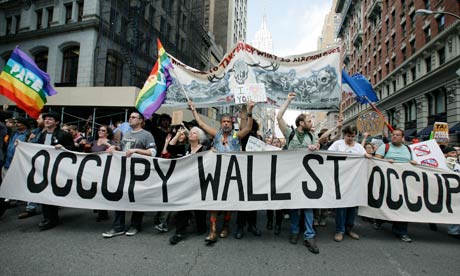
Stephen is no fan of the Occupy protests, or the Occupy protestors, and made his feelings known during a mid-day email a few weeks ago to Matt after witnessing a cluster of agitators who had some negative things to say about Bank of America.  A lengthy email debate touching on the subjects of corporate greed and protest politics ensued. 

Stephen: Matt, so I just stepped out to grab lunch and there's a bunch of fools protesting Bank of America. One is holding a sign saying "Corporate Greed Stole the American Dream". Care to weigh in? Or will you join me in declaring such protestors as envious free riders who aren't contributing to the system out of pure laziness but feel entitled to something because they are at least mediocre at breathing.


Matt: No, I'm not going to endorse your view of the protesters, because I think you grossly misrepresent where these folks are coming from.  First, if they were that lazy, they wouldn't have taken the time to go and protest.  Second, where do you draw the conclusion that everyone who dares to protest a bank that overpays its executives, rushes to foreclose on troubled homeowners, and funds companies that blow the tops off of mountains is an envious free rider?

Stephen: Well I don't think it's very much their business if a bank decides to overpay its executives. The only ones who have the right to be outraged are the shareholders because they are the ones affected. If the shareholders are OK, then they think the CEO has done well and is being properly rewarded. Why is it your business if those with financial skin in the game are alright with the compensation package? And is a large compensation inherently greedy? As for them being lazy, they are most definitely lazy - instead of going out and creating value (which is how and why one is paid) they are just bitching. I have no sympathy, at all, for them.

Friday, May 25, 2012

CR Sports: Ads on Jerseys

The writers of Conflict Revolution are nothing if not well read, so it should come as no surprise that they each happened to come across the same, very interesting article on an idle lunch break last week.  What would come as more of a surprise is if they drew the same, very interesting conclusions.  See what happens as Matt and Steve talk ads on Americans sports jerseys (it could be a real thing) below:


Stephen: Matt, a friend sent me this link today:

http://www.grantland.com/story/_/id/7929649/when-see-ads-american-jerseys

So I have a few questions for you:

1) What do you think about putting ads on sports jerseys?
2) Do you think this will happen?
3) Do you think it hasn't yet for the reasons he argues?

Matt: I read this article on my lunch break today, and I'm actually more curious what you think, as the more ardent free market advocate but also sports traditionalist (or so I thought).  To your questions - in reverse order:

3) Absolutely.  As Americans we love progress, but the flip side is that we cling to our last bastions of tradition, from the national parks to unadulterated sports jerseys.  I remember when the Spiderman 2 bases caused an uproar in baseball in 2004 and I think the sponsors-on-jerseys movement has a lot to get around before it becomes a reality. 

2) For the reasons I just outlined, I'm skeptical.  If it happens, though, it will probably be in the order the author suggested: the NBA doesn't care, the NHL just wants money/fans, and if ads on jerseys are successful in two of our four major sports, we'll see a domino effect in the other two. 

1) I respect the free market imperative, but I'm coming down on the side of tradition.  I mean, is nothing sacred?  Are we all consigned to a future no one really wants in this case, just because it will make some people a lot of money?  I understand that the latter point will probably tip the scales, but I think his argument about this "leveling the playing field" by cutting down on individual player endorsements is bullsh*t.  Level the playing field for who?  The teams?  The league, so it can be more about money?  Mark my words, the $300 mil annual figure that is cited by the author will never be seen by the fans.  You could argue that more revenue for teams would lower ticket prices, but I find that slightly absurd.  Realistically players will just demand more money and owners will just get richer.

Tuesday, May 15, 2012

State of the Economy: Part II

Over the past several weeks, the writers of Conflict Revolution have been exchanging a series of emails on the state of the US economy.  This is Part II of an ongoing debate that seems to have some serious legs - see where it takes us, and share your own thoughts, below:


Matt: Stephen, you've conceded that the stimulus created some jobs.  Are you accepting it as an Obama accomplishment?

Stephen: I’m not going to argue that spending does nothing, that’s a bit absurd. But let’s look at your math. The average of 3.6M, 1.97M, 2.1M and 1.5M is definitely not 3.9M… my numbers say its 2.29M – which I’ll still give you is significant. But, like I said above, all of these studies are done on economic models which basically assume that the inputs always work (which is how we get the saved number – the group is saying it should give us this, so if they didn’t really exist then they must just be saved jobs). So at best, we can say that these numbers are fuzzy; econometric models, which also have problems, think it was either entirely useless or helped about 2M jobs.  If your point was that the recession could have been worse, I’ll concede you the point. However, what I see as the real issue is effectiveness of the stimulus and if it’s actually helping to “stimulate” the economy. It seems to me like it was more of a Temprapetic bed than a Viagra.

Matt: On those numbers, you took the low baselines for all the analyses and I took the median, which seems fairer, and yields 3.9 million jobs created between 2009 and 2011.  Even if it was your number, I thought any job created was a good thing?  Either way, I'm not arguing that stimulus should fuel our economy forever.  In fact, if you were actually going to make an honest argument, you would acknowledge that the stimulus was only through 2010.  But the fact is, where else do you expect demand to come from in an economy where everyone is losing their job?  Give me a better answer than government stepping in to help out and maybe I'll consider it.

Friday, May 11, 2012

Email Debate: State of the Economy, Part I

It's election season, and one guy is running for re-election, which means this isn't the first, and will likely be far from the last time you read the words, "are you better off than you were four years ago?"  Still, as amateur members of the American punditocracy, Stephen and I could not suppress the urge to fire the first shotsHere's Conflict Revolution on the State of the Economy (Part I):

Stephen: Hey Matt, do you think the economy is better today than it was 4 years ago?

Matt: Well, considering that in late April 2008 the global financial system was about four months away from near collapse, the auto industry was about to die, and American households were as debt-saddled and overleveraged as ever... yes, yes I do.  State your claim to the contrary. 

Stephen: Let's start with GDP, since that's the only thing that has really gone up. GDP has risen by an unimpressive $235.6B, which is a total of 1.8% or 0.4% annually. Let's ignore the fact that people have been expecting the US economy to take off now for 3 years (I won't say it has no chance this year, just that its a heavy underdog). Now, I'm sure you are familiar with how GDP is calculated, GDP = C+I+G+(X-M). That G piece (government) has increased by 681.2B. So we can see where the new growth is coming from right? And after three years, it's still unimpressive. At what point do we say this is the problem and not the solution? (But let's try to stay off that for now, that's an entirely different debate)

Unemployment - the unemployment rate is at 8.1%, up from 5%. But that probably doesn't tell the whole story since labor force participation is constantly declining... look at the U-6 rate (unemployed/underemployed/"marginally attached workers" aka people who dropped out of the labor force but want a job) and that's up to 14.5% from 9.2%.  Total payrolls are down 5.9% as well.

Should we get into household income or housing? They are both down, housing by as much as 50%. Or how about the S&P 500, which is generally used a gauge of American business performance? Its down about 10% still from its 2007 highs and just about equal with its 2008 high. Oh and did I mention that QE1, 2 and Operation Twist have managed to push the money supply into stupid levels? Or that inflation has increased by 7% since Obama took office (I understand these is totally normally inflation rates, but it puts into perspective how bad things are since NOTHING else is increasing so rapidly).

Wednesday, May 9, 2012

Email Debate: The Gold Standard

After Stephen bought his first pair of gold teeth, the writers of Conflict Revolution felt compelled to consider whether or not it's a good thing that while the shiny metal now supports his two front teeth, it no longer backs our country's currency.  An enlightening email debate ensued. 

Stephen: Thoughts on the gold standard? Maybe we could have that as another email debate.

Matt: Really Stephen?  The Gold Standard?  Excuse me while I go for a drive in my Model T and then look at pictures of my girlfriend baring her ankle.  

Stephen: Matt, can you explain to me why fiat currency is a good idea? I know the argument for, but do you?

Matt: It's a good idea because monetary policy is one of the most effective tools for ameliorating the volatility of boom and bust cycles and insuring long-term economic stability.  There is only so much gold in the world.  Meanwhile, there are nearly twice as many people as when we abandoned the last vestiges of the gold standard in 1971.  An ever-growing global economy requires a flexible supply of money.  

Stephen: What if it turned out that the federal reserves mismanagement of fiscal policy lead to the biggest boom/busts in US history? (The great depression and great recession? And for for good measure lets consider their actions in the 70s during stagflation). Please explain how currency manipulation creates stability?

Friday, May 4, 2012

Week in Review: Occupy US, Baby

From Guy Fawkes to bin Laden, from Obama to the Titanic, Tommy, Iraq, and the burning
Übermensch, we've covered a lot of ground this week on Conflict Revolution. Don't miss a beat in our weekly countdown:

****
1) Matt raises the roof on D.C.'s building height ordinances. Is building skyscrapers (or even just above the 20th floor) just about real estate developer greed? Or is the character of the city itself at stake?

2) Speaking of capitalist hubris - and no, I'm not at even at the May Day socialist posts yet - would you like to take a voyage on the new Titanic?

3) We enter the complex and conflicted world of the Middle East with Kennan K. as our guide, as he breaks down Iraq's tenuous present and future dilemmas vis-a-vis Iran and the rest of the region like a boss;

4) Phil rambles about the unlikely but politically feasible alliance between socialism and anarchy as the Occupy Wall Street movement prepares itself for an "American Spring (& Summer)"

5) The man, it burns! The Burning man and his furry friends;

6) Matt likewise burns some straw men over why we should continue to support American space exploration;

7) And he also burns some Caps fans for leaving the Verizon Center too soon.

8) Tommy's inaugural Take (TiT?) blasts off into cyberspace - believe us when we say, now there will be blood

9) Das Ãœbermensch Brett Aho cometh: "Not everyone needs to go to college...Fraulein."

10) And last but definitely not least, the crown jewel of Conflict Revolution itself, the master-debaters Stephen and Matt:

OSAMA BIN OCCUPIED PART 1: WILL OWS SURVIVE??

OSAMA BIN OCCUPIED PART 2: OBAMA CAN HAZ CREDIT??

MAY THE 4TH BE WITH YOU!


Thursday, May 3, 2012

Email Discussion: Osama bin Occupied, Part II

Yesterday, Conflict Revolution began to explore the media convergence between the Occupy Movement's spring coming-back-out party and the one-year anniversary of Osama bin Laden's death.  After Stephen slung a few insults in the direction of OWS, and Matt expressed his disappointment in the movement's outcomes thus far, we're at it again this afternoon, this time exploring the other side of the week's big news in a discussion on how much credit Barack Obama should get for the killing of the fallen al-Qaeda leader. Without further adieu: 

****
Stephen: Matt, we always hear about how the economy wasn't Obama's fault and that he inherited it from Bush. The wars the same thing. If you believe there is credence in this (and I'd agree) should he not also give credit to Bush for laying the groundwork for killing Osama bin Laden? This seems necessary unless you have some evidence that Obama tossed out all the intelligence gathered before his term.


Matt: Absolutely, Barack Obama does not get full credit for the raid.  For one, he didn't crash land any helicopters or charge up any stairs to shoot the world's most wanted terrorist in the head.  And a lot of that intelligence was in fact gathered during the later Bush years.  However, since it WAS Obama who came into office ordering his national security team to re-focus on bin Laden after the effort had stalled, and since it was Obama who ordered the raid itself over the advice of his Vice President and top general (not saying Bush wouldn't have, but BHO did), he certainly gets to take his share of the credit, especially if holding it up as an example of gutsy national security leadership under pressure.  

Stephen: So how often does he mention this? Because he definitely mentions that Bush was responsible for the economy all the time.

Wednesday, May 2, 2012

Email Discussion: Osama bin Occupied, Part I

Yesterday was a very interesting news day, as the one-year anniversary of Osama bin Laden's death competed for attention with International Worker's Day 2012, sought after by the Occupy Movement as a jumping off point for its grand re-entry into the American political discussion.  In honor of both Socialist Christmas (in the indomitable Stephen Siena's words) and the SEAL team that killed bin Laden, Mr. Siena and I exchanged some brief barbs on both topics.  Stay tuned tomorrow for some back and forth on the killing of Osama... in the meantime, our thoughts on Occupy, below:

Stephen: Matt, do you think Occupy Wall Street will become relevant again and more importantly for the election?

Matt: I hope the message carries forward into the general election, but I also fear that the messengers have discredited themselves.  At a certain point with Occupy, the message got overshadowed by the shenanigans, and I think that's really unfortunate, because the initial protests, while lacking specificity, tapped into something among the broader American public that has been lingering under the surface for quite some time. It's not just income inequality, either.  It's the broader sense that the game is rigged, and those with disproportionate amounts of wealth and power are finding it easier than ever to write the rules to their advantage. As I said, however, rather than successfully channeling this frustration, as the movement did at its outset, 'Occupy' has become more synonymous with outlandish behavior than it has with any tangible message.  It's become a caricature of itself and I think that's a real shame.

Stephen: So your answer was that it would not play a role? (Though you seem to leave open the possibility that the sentiment could). I agree with this. However do you think that they could have created the same spirit and been true it while professing an organized structure?

Thursday, April 26, 2012

Email Debate: What's Fair?

With the recent debate over the Buffett Rule and talk of economic fairness filtering into the presidential campaign, Matt and Stephen decided to get to the bottom of what we mean when we say "fair share" - and how that should be reflected in tax policy.  Let's see what happens when the emails exchanged by two people stop being polite... and start getting real.

Stephen: Matt, much is spoken about paying one's "fair share". But what does that even mean? Can you give me a principle that we could gauge future taxes on?

Matt: I actually think that "fair share" alone is a terrible political line because it sounds like something my kindergarten teacher would have said and it doesn't do anything to connect the idea of fairness to economic growth.  That being said, to me, fairness is the idea that we have the biggest economy in the world, and should ensure that everyone in the country at least has the opportunity to share in its riches.  Not a guarantee, but at least the opportunity.  We should build the best tax and government structure we can to ensure that - therefore, if you make a lot of money, you should be taxed at a higher rate in order to help pay for that structure and ensure broader opportunity for others living in the same country that nurtured your success.  

Stephen: This response does a great deal to use nice concepts and ideas. But from that I've only gained that you want a tax structure that allows everyone to participate in acquiring riches. Let's hold off on that idea for just a moment, but I'd like to get back to it later. Now, can you please articulate what a "fair share" tax systems would look like? How do we know if we achieved it? Unless it just based on ensuring broad participation in economic growth.

Matt: Something tells me that this will conclude with you arguing that the only "fair" outcome would be for everyone to pay a flat tax (i.e. 20% of your income regardless of what you make).  This is a compelling argument, but only on a superficial level.  We need to pay for a government that responds to the needs of its people, and it is our responsibility to ensure that everyone has as close to an equal chance as possible at succeeding in life.  Taxing everyone at 20%, or 30%, or whatever it is would not yield anywhere near enough revenue to pay for this.  Thus if you have more money, you should pay more.  Not an exorbitant amount, but more.  Utilitarianism 101 - greatest good for the greatest number.

Monday, April 23, 2012

Agents Gone Wild, Part II: Debating the Fallout

The Obama Administration may not want to talk about the Secret Service's recent adventures south of the border, but Matt and Stephen do!  Vicariously enjoy a night of wild partying and Columbian prostitutes with another Conflict Revolution email debate - as always, these are real emails from real white collar workers...

****

Stephen: Should we mock debate if secret service agents should be allowed hookers?

Matt: Mock debate what?  Those SS agents have like, the most stressful jobs ever.  What do you have against them taking a break every once in awhile?  

Stephen: Can we avoid calling them SS agents? That invokes bad guys in my mind. As for their stressful job, I agree. Did they pay for their own $47 hookers? I wonder if they did background checks on them first?

Matt: They paid $47 per hooker?!?  I don't really know anything about hooker prices, but I would have to hope that with the strong dollar in Latin America they at least got fair value on that.  Good point on the background checks.  In the game of prostitute solicitation, I think we can call that competitive advantage.

Stephen: Perhaps that's what caused the fight? They knew from their intelligence services that those particular acts from those particular hookers typically only cost $40?

Monday, April 16, 2012

Email Discussion: Do Tax Returns Matter?

In one of Conflict Revolution's more civil discussions, Stephen and Matt discuss whether or not politicians should be compelled to release their tax returns, and whether wealth matters when you're running for President.

As always, these are real emails from real people...

****

Stephen: Matt, with tax day nearing and Obama's tax return out there... do you think there is any reason for releasing tax returns for the general public's information?

Matt: YOU OPPOSE THIS? THERE IS NO HOPE. Just kidding. Maybe you don't actually oppose it. But seriously, I had never thought much about the tax return question. I guess it's just one of those things I came to take for granted about presidential campaigns. What's your objection (if you have one)?

Stephen: My objection is that they don't really mean anything (tax returns do not affect one's policies) yet the media plays them up. Instead, they are used as a distraction in order to (largely) create a disconnect between a candidate and voters (who likely don't make as much) - this is a particularly useful tactic on the left. It seems to me like it's only utility is to raise class issues. But I believe it was Jon Stewart who defended Obama's elitism by claiming (and I agree 100%) "shouldn't the president be of above average intelligence?" Well if that is true, and again I couldn't agree more, what's so crazy about the president being of above average wealth?

Matt: I see your point. Who really cares exactly how rich Mitt Romney is, since it's not like we didn't know already that he worked in private equity, where one could reasonably make the assumption that he made a lot of money. Pretty sure the awkwardness and general tone-deafness that people attribute to his well-heeled background would also have shone through regardless. On the other hand, don't we want as much information as possible to be out there on the people whom we are going to consider electing?

Friday, April 13, 2012

BUFF THAT: Debating the 'Buffett Rule'

Stephen and I are busy, but not too busy to take some time out of our robust daily schedules to exchange a series of snarky emails when the situation calls for it. Here is the text of our most recent exchange, a lively back and forth that started on the so-called Buffett Rule, President Obama's proposal that all millionaires pay an effective tax rate of at least 30%, and morphed into a much more in-depth tussle over taxes, middle-class prosperity, and the general role of government.

As always, these are real emails exchanged by real people:

****

Matt: Steve, rumor has it that Senate Democrats plan to bring the Buffett Rule up for a vote this week. You're with Harry Reid on that one, right?

Stephen: Oh of course. You know I love nothing more than taxes that manipulate the data to appear reasonable. Although, I'm a bit disappointed Buffett doesn't understand the tax system better. I always thought he was a super smart dude.

Matt:
Full disclosure - I'm not the biggest fan of the Buffett Rule either. Do I believe in raising taxes on the rich? Yes. But I think the Buffett Rule is a bit of a red herring that is more symbolic gesture than serious tax policy. Ideally I would like to see us raise all taxes on incomes above $250,000 (including capital gains) to Clinton-era levels - given the success our economy enjoyed during that period - 23 million new jobs - and the massive dent that would make in the budget deficit, I think you'd be hard-pressed to justify the argument that these moderate tax increases would hurt the overall economic situation. Indeed, they may improve it. Speaking of capital gains, is that what you mean by manipulating the data, or Buffett not understanding the tax system? Explain.

Stephen:
Matt, increased taxes on all those "millionaires and billionaires" making over $250k is ridiculous. It certainly wouldn't aid the economy, you've got an accusation problem here. It also wouldn't take that much of a dent out of the deficit. How they would hurt is by cutting the savings rate which would reduce the money banks can loan, mostly to small businesses- which in turn creates new wealth and jobs. As for the Buffet rule, it will essentially bring the capital gains tax for those making over 1M to 30% but capital gains (esp long term) are basically just profits from a business... which have already been taxed at rates that the president acknowledges are the highest in the world (35%). So basically if you made 100, corporate tax would take 35% and capital gains already takes 15, leaving you 55.25... an effective 44.75% tax rate. With this it will jump to 54.5%!

More snark after the jump...