Showing posts with label Economy. Show all posts

Friday, June 29, 2012

The Next Bubble

Its been so long since last we... okay, I'll stop.  But seriously, as our three readers know, its been awhile since I've taken the time to put together something substantive for the blog.  Thank goodness for Conflict Revolution's new writers, or Stephen and I might owe more in child support to this whole enterprise than a certain former elected official does to his love child. 

Guess again!
Which brings me to the point about welcoming the new writers I mentioned.  We are happy to benefit from the outstanding contributions of Elaine Chen, who will be helping us with morning updates and assorted other posts, and Nadia Sheikh, who has kindly offered to cross post some content from her excellent blog Nadia in Pakistan.  Thanks Nadia and Elaine, and welcome!

Yet even as Conflict Revolution's platform widens and the blog expands, we can't forget where we came from.  Steve and I have most recently been working on a couple of (mostly) friendly exchanges on topics ranging from inheritance taxes to regulatory burdens, Republican obstruction, and tacky campaign fundraising gimmicks.  Sexy!  But if you're craving some email debate and you just can't wait, see our most recent discussion on plastic bags and global warming.  It's... great.

Now, that promised substantive post. 

Wednesday, June 27, 2012

[Not-so] Love Lockdown, Prologue (1/4): Do Convicted Criminals dream the American dream?

Do convicted criminals dream the American dream?

Sure they do - Just look at freshly sentenced criminals Rajat Gupta (former Goldman board member), R. Allen Stanford (sentenced to 110 years in prison without parole), and of course Grandaddy Ponzi himself, Bernie Madoff. Hell, these guys even lived the American dream, with its fast cars, deep pockets, luxury yachts and diamonds for the ladies in life.

Now, these riches-to-rags storybook characters are scheduled to rot in a Federal penitentiary for the rest of their lives, leaving exponentially more finances and possibly life plans ruined in their wake. All this justice, of course, conducted in order to dissuade other current or would-be criminals from acting...in exactly the only way they know of how to get to the American dream - Get Rich or Die/Go to Jail Trying.

50 Cent was on to something
A rather paradoxical message, given the global rash of government-bank bailouts and the continued reliance on the instruments (i.e. financial markets) of who-dares-wins capitalism. But enough of this suddenly-fashionable bashing of fallen financial idols. It seems like just yesterday when activist judges, juries, and members of the media started defending the rights of convicted rapists, murderers, gang-bangers and the assorted denizens of American death row - new and vindicating/damning DNA evidence notwithstanding - so I'm sure public opinion will grow weary of its latest social witch-hunt sooner or later, and that District Attorneys/Federal Prosecutors will likewise find some other scapegoats upon which to build their reputations on the docket. Sooner or later, our generation's To Kill a Mockingbird of the early 21st century will be published, this time admonishing the veritable inquisition of financial criminals during a time of long-term recession and entrenched unemployment.

Yet even in a time of economic downturn, when Wall Street becomes an easy target of Main Street's wrath, no one seems to be pissing on how the wildly-popular (and mostly plastic) Kardashians, the train-wreck-of-an-excuse-for-a-man Charlie Sheens, or the well-paid, drug-snorting Lindsay Blohan-type celebrities don't pay "their fair share" of American taxes. Plus Justin Bieber- he's CANADIAN!! Where is that money going??

oh...nevermind.

What compelled me to finally write original content for the blog again - and a three-part series, at that - was a combination of many factors, the premier of which was my roommate's comment that, "no offense, but I think the American Dream is more of a Dream than a Reality."

Monday, June 25, 2012

RE: Getting your Money's Worth - College "Career Centers" Need to Live up to their Namesake

I only just realized this recently, after meeting more and more recent graduates from peer universities in the workforce (i.e. same-sized, similarly-minded and educated private schools) that Georgetown's career center is painfully sub-par offers mediocre results at best. I'm not saying it's poorly-run - in fact, they are very well-run and in many ways efficient given the skeletal staff they have in relation to the quantity of resources and student services they offer.

The problem is just that these services don't work nearly as well as they should, and indeed have to, in the present economy insofar as the actual results of students spending time and effort (and money) on their programs should be full-time, gainful employment. They need a different set of performance metrics, and in fact the ONLY performance metric they should be basing that center on is how many graduates or students affiliated with Georgetown are put into full-time job positions, or at least something with benefits.
In fact, they shouldn't even measure anything besides median/mode income, and the VALUE of EMPLOYMENT BENEFITS DERIVED or PAID FOR vs.BY (out-of-pocket) recent graduates, because I ASSURE you that even worse than not having income (anyone can flip burgers and have a W-2 form to fill out come tax season) is not having stable benefits for health and welfare that were PAID for and ASSUMED services provided by colleges and universities to students.

THAT type of stability, the stability upon which overall fiscal, familial, "defining life change," or any other intangible but no less important basis of welfare, is the dominating purpose of obtaining a career.

(and Phil proves this and his other points after the jump, where you can learn about Employment Benefits and Compensation for Tax Purposes- IRS Jargon 001)

Guest Post: Getting Your Money's Worth

When Nadia Sheikh (Georgetown '09) told her Dean how she hadn't found "gainful employment" despite having both a Bachelor's and Graduate Degree, that Dean joked: "Does she want her money back?"

Nadia is now pursuing a career in international development consulting in Pakistan, where she is keeping a blog journal of her experiences living and working abroad. You can find more of Nadia's writings at nadiainpakistan.blogspot.com, or follow her on twitter (@sheikhandbake).

Getting Your Money's Worth
By Nadia Sheikh

About two months ago, Dean Gillis, the dean of the College at Georgetown University made a pit stop in my hometown of Portland, Oregon. During the Q and A section, my mom raised her hand and told him about my story -- how almost three years post-graduation, I haven't found gainful employment despite honors from Georgetown and now LSE. In his response, first, he made a joke, 'does she want her money back?' Then went on to say that I could contact him.

I sent him a friendly email, explaining my circumstances and how I've done everything in my power to get a job. I interned throughout college (six internships), volunteered post college, had part-time jobs, and did another internship for eight months post college. I went to the career center at LSE and Georgetown for weeks on end, getting appointments whenever they'd let me this past year, gone to every networking and career center event I could possibly go to to meet HR reps, career fairs, 500+ applications, and continued calling and meeting alums on the alumni networks for both schools in the US and even in Pakistan. Why do I not have a job yet? Is it just bad luck? The economy? Interviewing skills? My field of choice? Lack of connections?


Thursday, June 7, 2012

Email Debate: Corporate Greed and the American Dream

Stephen is no fan of the Occupy protests, or the Occupy protestors, and made his feelings known during a mid-day email a few weeks ago to Matt after witnessing a cluster of agitators who had some negative things to say about Bank of America.  A lengthy email debate touching on the subjects of corporate greed and protest politics ensued. 

Stephen: Matt, so I just stepped out to grab lunch and there's a bunch of fools protesting Bank of America. One is holding a sign saying "Corporate Greed Stole the American Dream". Care to weigh in? Or will you join me in declaring such protestors as envious free riders who aren't contributing to the system out of pure laziness but feel entitled to something because they are at least mediocre at breathing.


Matt: No, I'm not going to endorse your view of the protesters, because I think you grossly misrepresent where these folks are coming from.  First, if they were that lazy, they wouldn't have taken the time to go and protest.  Second, where do you draw the conclusion that everyone who dares to protest a bank that overpays its executives, rushes to foreclose on troubled homeowners, and funds companies that blow the tops off of mountains is an envious free rider?

Stephen: Well I don't think it's very much their business if a bank decides to overpay its executives. The only ones who have the right to be outraged are the shareholders because they are the ones affected. If the shareholders are OK, then they think the CEO has done well and is being properly rewarded. Why is it your business if those with financial skin in the game are alright with the compensation package? And is a large compensation inherently greedy? As for them being lazy, they are most definitely lazy - instead of going out and creating value (which is how and why one is paid) they are just bitching. I have no sympathy, at all, for them.

Tuesday, May 22, 2012

Tuesday Afternoon: ADHD Links

So unlike my typical narrative style links, I wanted to share with you today some links from a variety of different topics that I found interesting over the past few days. Here goes:

The New York Times wrote about how the paralyzed might not be permanently paralyzed for too much longer. I've heard of this technology before and studies where people were able to control computers with sensors plugged to their brains, but this is a huge step. This leap is for controlling robotic limbs with one's mind.

Then there's this in the super-progressive state of Florida: driverless cars are now hitting the road. Florida is just one of a few states that is allowed to test them so far.

But I also found out that wind turbines might not be as great savers of the environment as we thought...turns out that they are responsible for localized climate changes.

Then I read about how smart phones are changing the nature of our cultural spaces.

I also found this interesting about what tastes Chinese consumers have as they grow wealthier.

Finally, to keep up the tech theme here, this article from Forbes really hits the nail on the head as to why the Facebook IPO was such a flop.

Lastly, because I know if I don't post it Matt will twist the sh*t out of it, Dems are revolting against Obama's harshness towards capitalism and Bain; and Mark Cuban thinks the next bubble is in student debt.

Tuesday, May 15, 2012

State of the Economy: Part II

Over the past several weeks, the writers of Conflict Revolution have been exchanging a series of emails on the state of the US economy.  This is Part II of an ongoing debate that seems to have some serious legs - see where it takes us, and share your own thoughts, below:


Matt: Stephen, you've conceded that the stimulus created some jobs.  Are you accepting it as an Obama accomplishment?

Stephen: I’m not going to argue that spending does nothing, that’s a bit absurd. But let’s look at your math. The average of 3.6M, 1.97M, 2.1M and 1.5M is definitely not 3.9M… my numbers say its 2.29M – which I’ll still give you is significant. But, like I said above, all of these studies are done on economic models which basically assume that the inputs always work (which is how we get the saved number – the group is saying it should give us this, so if they didn’t really exist then they must just be saved jobs). So at best, we can say that these numbers are fuzzy; econometric models, which also have problems, think it was either entirely useless or helped about 2M jobs.  If your point was that the recession could have been worse, I’ll concede you the point. However, what I see as the real issue is effectiveness of the stimulus and if it’s actually helping to “stimulate” the economy. It seems to me like it was more of a Temprapetic bed than a Viagra.

Matt: On those numbers, you took the low baselines for all the analyses and I took the median, which seems fairer, and yields 3.9 million jobs created between 2009 and 2011.  Even if it was your number, I thought any job created was a good thing?  Either way, I'm not arguing that stimulus should fuel our economy forever.  In fact, if you were actually going to make an honest argument, you would acknowledge that the stimulus was only through 2010.  But the fact is, where else do you expect demand to come from in an economy where everyone is losing their job?  Give me a better answer than government stepping in to help out and maybe I'll consider it.

Monday, May 14, 2012

Monday, Monday: Links for 5/14/12


Happy belated Mother's Day to all the mamas out there.  Since very few of them are likely reading this blog, go ahead and pass along our best wishes to your mother, when you get the chance.  No, that wasn't a backhanded joke.  Here at Conflict Revolution, we're nothing if not genuine.

No one would ever confuse Monday with Sunday, glorious bastion of the fun day.  Still, here's hoping you got a little bit of rest last night, so that the 9:00 hour isn't treating you too terribly.  Or who knows, maybe you're just waking up.

Stephen has gone fishin' for the day (when your office is in Tampa, FL, you do business in weird places), so in a break from our normal routine, you get a left-leaning start to your work week.  Whether you're just getting to your desk, just waking up, or have no plans to do anything at all today, dive into some CR morning links to get your Monday started off right:

****
1) The New York Times explores our generation's big, ugly sleeping giant of student loan debt in an ongoing series.  Something should probably be done about this - but what?  ["A Generation Hobbled by the Soaring Cost of College," NYT, 5/12/12].

Also see: Should Higher Education Be Free? 

2) Liberal Catholic E.J. Dionne takes the Freedom From Religion Foundation to task for targeting liberal Catholics in a new ad, but reserves some harsh words for the conservative wing of the Church as well.  As a liberal, intermittent church-going Catholic myself, I can attest to often feeling like I'm stuck between an ecclesiastical rock (the Church's hard-line position on social issues) and an ideological hard place (the outright skepticism - if not open hostility - of many on the left toward organized religion).  Dionne navigates this contradiction well, showing that ultimately, neither side is well-served by constantly being at each other's throats... sadly, these sorts of narratives are beginning to sound depressingly familiar ["I'm not quitting the Church," Washington Post, 5/14/12].

Also see: Just When You Thought the Culture Wars Were Over...

3) Are billionaire dual citizens choosing to give up their US citizenship in order to avoid paying higher taxes?  Will this factor into a broader case for overall tax reform, or just convince more on the Right to advocate for deeper cuts on existing rates?  ["Facebook Co-Founder Saverin Gives Up U.S. Citizenship Before IPO," Bloomberg, 5/11/12].

4) Speaking of the Right, leading the House of Representatives into the ideological abyss wasn't enough for the Tea Party, so they've now got their sights set on the Senate ["For Tea Party, Focus Turns to Senate and Shake-Up," NYT, 5/13/12].

5) Finally, the latest presidential tracking polls continue to show a close race - Rasmussen has Romney with 48% of the vote to Obama's 44%, while Gallup shows Obama with a 1 point advantage (46% - 45%) [Real Clear Politics Poll Average, 5/12/12].

Pop, lock and drop Conflict Revolution into your Bookmarks Toolbar for more updates later in the day, when we'll post Part II of Stephen's and my ongoing debate on the current state of the U.S. economy.

Stay dry out there, folks.

Friday, May 11, 2012

Email Debate: State of the Economy, Part I

It's election season, and one guy is running for re-election, which means this isn't the first, and will likely be far from the last time you read the words, "are you better off than you were four years ago?"  Still, as amateur members of the American punditocracy, Stephen and I could not suppress the urge to fire the first shotsHere's Conflict Revolution on the State of the Economy (Part I):

Stephen: Hey Matt, do you think the economy is better today than it was 4 years ago?

Matt: Well, considering that in late April 2008 the global financial system was about four months away from near collapse, the auto industry was about to die, and American households were as debt-saddled and overleveraged as ever... yes, yes I do.  State your claim to the contrary. 

Stephen: Let's start with GDP, since that's the only thing that has really gone up. GDP has risen by an unimpressive $235.6B, which is a total of 1.8% or 0.4% annually. Let's ignore the fact that people have been expecting the US economy to take off now for 3 years (I won't say it has no chance this year, just that its a heavy underdog). Now, I'm sure you are familiar with how GDP is calculated, GDP = C+I+G+(X-M). That G piece (government) has increased by 681.2B. So we can see where the new growth is coming from right? And after three years, it's still unimpressive. At what point do we say this is the problem and not the solution? (But let's try to stay off that for now, that's an entirely different debate)

Unemployment - the unemployment rate is at 8.1%, up from 5%. But that probably doesn't tell the whole story since labor force participation is constantly declining... look at the U-6 rate (unemployed/underemployed/"marginally attached workers" aka people who dropped out of the labor force but want a job) and that's up to 14.5% from 9.2%.  Total payrolls are down 5.9% as well.

Should we get into household income or housing? They are both down, housing by as much as 50%. Or how about the S&P 500, which is generally used a gauge of American business performance? Its down about 10% still from its 2007 highs and just about equal with its 2008 high. Oh and did I mention that QE1, 2 and Operation Twist have managed to push the money supply into stupid levels? Or that inflation has increased by 7% since Obama took office (I understand these is totally normally inflation rates, but it puts into perspective how bad things are since NOTHING else is increasing so rapidly).

Friday Update: Links for 5/11/12

Its been a relatively eventful week in the news, with opposition politics on the march in Europe, former playboy models upstaging Mexican presidential debates, and our own president declaring his support for gay marriage here in America.  Here at Conflict Revolution, we'll cap it off for you with a roundup of what's on our reading lists this Friday morning:

1) The unemployment rate would be a full percentage point lower today (7.1%) if not for cuts to government at the federal, state, and local level since the recession took hold ["Unemployment Rate Without Government Cuts: 7.1%," Wall Street Journal, 5/8/12].

2) Meanwhile, the economy has added 4.2 private sector jobs since the official end of the recession in June 2009, but government payrolls, including for police officers, teachers, and firefighters, have fallen by over 600,000 during that time ["CHART: Economy Has Recovered All Private Sector Jobs Lost Since Obama Took Office," Think Progress, 5/4/12].

3) Even the Wall Street Journal admits those cuts have held back the economy recovery ["Depth of Recession Makes Recovery Look Worse," WSJ, 5/4/12].

4) But that won't stop the Washington Times from arguing its all Obama's fault ["Desperately avoiding Obamanomics and Obamacare," Washington Times, 5/8/12].

5) If the presidential nominee of your party tries to reverse his position on a decision that he blatantly opposed at the time, that probably means it worked, right?  Mitt Romney tries to take credit for the auto bailout ["Romney taking credit for auto industry success," US News, 5/7/12].

6) Lastly, conservatives really want you to care about this, but it probably says more about West Virginia than it does our sitting president.  Sorry, John Denver ["Ouch! Obama loses 41 percent of W. Va. vote to federal inmate," CS Monitor, 5/9/12].


Be sure to stay tuned later today for Part I of our most recent email debate on the state of the economy since President Obama took office, along with a recap of what went on the blog this week. 

Happy Friday, folks!

Wednesday, May 9, 2012

Email Debate: The Gold Standard

After Stephen bought his first pair of gold teeth, the writers of Conflict Revolution felt compelled to consider whether or not it's a good thing that while the shiny metal now supports his two front teeth, it no longer backs our country's currency.  An enlightening email debate ensued. 

Stephen: Thoughts on the gold standard? Maybe we could have that as another email debate.

Matt: Really Stephen?  The Gold Standard?  Excuse me while I go for a drive in my Model T and then look at pictures of my girlfriend baring her ankle.  

Stephen: Matt, can you explain to me why fiat currency is a good idea? I know the argument for, but do you?

Matt: It's a good idea because monetary policy is one of the most effective tools for ameliorating the volatility of boom and bust cycles and insuring long-term economic stability.  There is only so much gold in the world.  Meanwhile, there are nearly twice as many people as when we abandoned the last vestiges of the gold standard in 1971.  An ever-growing global economy requires a flexible supply of money.  

Stephen: What if it turned out that the federal reserves mismanagement of fiscal policy lead to the biggest boom/busts in US history? (The great depression and great recession? And for for good measure lets consider their actions in the 70s during stagflation). Please explain how currency manipulation creates stability?

Tuesday, May 8, 2012

Does "Anti-Incumbency" Make Any Sense?

In his daily links yesterday (we just can't seem to get off the subject of socialism, can we?), Stephen highlighted the most recent news out of France, where opposition candidate Francois Hollande defeated outgoing French President Nicholas Sarkozy in a runoff election this weekend.  Hollande's victory, in addition to parliamentary elections in Greece that saw the rejection of both major parties, were spun by the media as a sign of a vast, anti-incumbent wave beginning to sweep Europe, and Stephen, citing the latest Gallup Poll results (Obama 47/Romney 45 in a poll of 12 swing states), wondered aloud whether that wave could hit home in time to make Willard Mitt Romney our next president in November.

Of course, the irony to the "anti-incumbency" argument is that the very same austerity policies voters just rejected in Europe are the policies that Romney, together with a House GOP majority that is probably safe, would be compelled to pursue should Barack Obama himself fall prey to anti-incumbent sentiment in November. 

Pages of pixellated and non-pixellated ink alike have been spilled over whether voters always understand the implications of their decisions, especially in America, where our two-party system lends credence to the visceral sense that if things aren't going as well as we would like under one guy, we should give the other guy a chance.  This might make sense on a gut level, but any glance across the pond at Europe tells us it would be a disaster if anti-incumbency wins the day here in America.

Friday, May 4, 2012

Friday Links: Economic Magicians and Real Ones

An economic inequality-themed morning update to dampen your naturally perked up spirits this Friday morning, lest you be in too good of a mood before the weekend has really begun (you've still got 8 more hours).  In sports, they call that regressing to the mean.  Here at Conflict Revolution, we're just mean.

Steve and I are getting ready to debate this topic in the near future.  We've just been waiting for an opening, and with the return of Occupy Wall Street, not to mention the informal kickoff of a general election campaign involving a former private equity executive that happens to be a multi-millionaire, it may be time.  So stay tuned, readers.  All eight of you are in for a real payoff in the near future.

Here's what's on our desktops, laptops, iPads, and iPhones right now:

1) Ed Conard, a former Romney partner at Bain Capital, says that inequality makes the economy more efficient and helps us all out in the long run... and points to a soda can as evidence.  Some fascinating back and forth here between the subject and author - though I must say, in addition to my general disagreements with his thinking, I too found Conard's economic philosophy to be disturbingly indicative of a worldview where none of us are worth anything unless we make boatloads of money.  Hat tip to CR reader Mario Arthur-Bentil for the link ["The Purpose of Spectacular Wealth, According to a Spectacularly Wealthy Guy," The New York Times Magazine, 5/1/12]. 

2) Former Clinton Labor Secretary Robert Reich makes a counterpoint as well as anyone, and marks the occasion of the Dow Jones returning to its 2007 high by noting that the ratio of total income going to capital (investors) rather than labor (workers) is at its highest level since the 1920s.  I'd like to see him and Ed Conard debate ["The Tinder-Box Society," Huffington Post, 5/1/12]

3) On a related note, why tax cuts won't jolt the economy ["Tax Cuts and Job Growth: They're Just Not That Into Each Other," Huffington Post, 5/2/12]

4) And on an unrelated one, even I'm not going to deny that this doesn't look good.  Magicians?  Really NOAA?  ["NOAA pulls ad seeking magician for training event," CNN.com, 5/3/12]

5) Finally, if you're a recent college grad, and you live in DC, there's a good chance you work at one - they have names like the American Society for Surgery of the Hand, and they are the country's professional associations.  Really interesting take, I think, on how a lot of these membership organizations find themselves at a crossroads between being creators and curators, and the implication that holds for the future of managing digital overload ["The Secret Power of Associations - Revealed," Forbes, 4/29/12]. 

W.H. Auden once said that "a false enchantment can last a lifetime," so if you're a returning visitor to Conflict Revolution, we've got you good!  Enjoy your Fridays, folks.  Keep your browsers dialed for this week's roundup later in the day, only at the one and the only. 

Wednesday, May 2, 2012

Email Discussion: Osama bin Occupied, Part I

Yesterday was a very interesting news day, as the one-year anniversary of Osama bin Laden's death competed for attention with International Worker's Day 2012, sought after by the Occupy Movement as a jumping off point for its grand re-entry into the American political discussion.  In honor of both Socialist Christmas (in the indomitable Stephen Siena's words) and the SEAL team that killed bin Laden, Mr. Siena and I exchanged some brief barbs on both topics.  Stay tuned tomorrow for some back and forth on the killing of Osama... in the meantime, our thoughts on Occupy, below:

Stephen: Matt, do you think Occupy Wall Street will become relevant again and more importantly for the election?

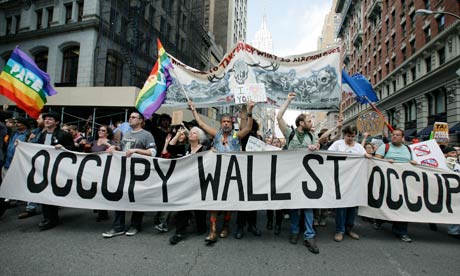
Matt: I hope the message carries forward into the general election, but I also fear that the messengers have discredited themselves.  At a certain point with Occupy, the message got overshadowed by the shenanigans, and I think that's really unfortunate, because the initial protests, while lacking specificity, tapped into something among the broader American public that has been lingering under the surface for quite some time. It's not just income inequality, either.  It's the broader sense that the game is rigged, and those with disproportionate amounts of wealth and power are finding it easier than ever to write the rules to their advantage. As I said, however, rather than successfully channeling this frustration, as the movement did at its outset, 'Occupy' has become more synonymous with outlandish behavior than it has with any tangible message.  It's become a caricature of itself and I think that's a real shame.

Stephen: So your answer was that it would not play a role? (Though you seem to leave open the possibility that the sentiment could). I agree with this. However do you think that they could have created the same spirit and been true it while professing an organized structure?

Man vs. Straw Man: Space Exploration

Stay tuned for an email discussion on the Occupy movement in the 5:00 hour.  In the meantime, some reaction to this, from Reuters: "'Tens of billions' of habitable worlds in Milky Way," 3/28/12

Space. I've written about it before, and it fascinates at least one of your writers here at Conflict Revolution.  It seems we come across one of these stories every few months or so - astronomers complete a new set of research, we find out something about our own galaxy or another, far away one that we didn't previously know, it increases the likelihood that we will one day find life somewhere in the cosmos.  The space-inclined among us get a little more excited.  Carl Sagan does the opposite of turning over in his grave.  And yet still, with each revolution of the research cycle, not to mention our own planetary merry go-round that we call a year, the mystery looms: Is there anyone else out there?

Is there?

That's an open question, and we may never know.  I'll tell you once thing I do know, however.  My venerable army of straw men, the Washington Generals of editorializing, preservers and protectors of my favorite rhetorical device, is right here, right now, on Conflict Revolution, to serve up counter-arguments for me to deconstruct.  The Straw Men are always ready with a seemingly valid point to be considered... and swiftly batted down.

Tuesday, May 1, 2012

OWS: Socialist Anarchy, or Anarchistic Socialism?

RE: Socialism and the state of the Occupy Wall Street movement as of May Day [WaPo], it strikes me (no pun intended) as extremely ironic that the "anti-institutional" core beliefs of a movement, which invokes "V for Vendetta" and Guy Fawkes-inspired images of anarchy at every turn, would suddenly throw its weight behind a socialist message - the most naturally institutional cause of all, as an artificially-induced redistribution of capital. Indeed, besides the effects of winter and getting kicked out of protest spaces by law enforcement, OWS failed to capitalize on any meaningful policy gains despite international media attention because it lacked centralized leadership or central figures around which the movement could coordinate and focus its impact.


http://boston1775.blogspot.com/2011/11/new-political-meaning-for-guy-fawkess.html
The idea of no centralized leadership and the destruction of institutions is so fundamental to anarchy that it stands in complete conflict with any idea of an institutionalized social compact between the state and its people, and history shows that the possibility of an alliance between anarchism and socialism is logically impossible. Yet as Stephen has already alluded in his morning update, political socialism is once again on the march around the world and in the United States, even if many social welfare policies are precisely what have bankrupted Europe and sent America spiraling into debt. It's also what is most politically feasible [WaPo] given the harshness of existing economic conditions and future austerity measures: In a world with zero or negative growth and stagnating employment, capitalism quickly loses its luster. 

Hit the jump to read more on how OWS can revive itself in 2012...

Morning Links: May Day (International Workers’ Day): the Socialist’s Christmas


For those of you were were not history majors or somehow got here and know nothing about socialism (if you got here knowing Matt, this seems highly unlikely) here's some info on May Day (International Workers’ Day). 

Since today is May Day, let’s do a socialist themed morning update.


Monday, April 30, 2012

Morning Links: Uniting Monday Haters with the Crazies who Love to Get Back to Work

So in case you started your weekend really early and spent most of it in a blacked out haze with uncomfortable periods of sobriety/hung-overness, I'm sure you are aware that your favorite NFL team just made some pretty big decisions over the weekend at the 2012 NFL Draft. If you're really not happy to be back at work right now, this is probably a pretty excellent thing to review as it can probably get you to at least lunchtime before you have to get into an excel spreadsheet to do some real work. CR is pretty happy with our pick, especially since if it doesn't work the Giants could probably just start a circus.


Friday, April 27, 2012

Friday Links: Heresy, Innovation, and Disappointing GDP

Ice Cube knows it, you do too.  What?


That's right, it's Friday.  So get your open containers ready because Conflict Revolution Daily Links are about to go DOWN.  Let's take a look at what's in the news today:

1) The United States economy grew at a disappointing rate of 2.2% on the first quarter of 2012, lower than the median rate of 2.5% forecasted by economists and lower than the 3.0% growth between October and December of 2011.  Some silver lining?  Consumer confidence hit the highest level in a year, indicating improving demand, while household purchases ticked up by 2.9%, exceeding even the most optimistic estimates.  Also, Germany and Japan's economies are shrinking, and Britain is officially in a double-dip recession... so at least we're not them. ["Economy in US Grew Less Than Forecast in First Quarter," Bloomberg, 4/27/12]

2) Stephen Siena, CR's other esteemed writer, has long argued that modern, Western secularism is deeply rooted in Judeo-Christian thought and stressed that this really makes the US a Christian nation. So is Western secularism just another in the long line of Christian heresies? ["Bad Religion," Slate, 4/19/12]

3) CNN's John Avlon gives a well-reasoned perspective on tax reform, but how anyone sees the Republicans and Democrats as being equally intransigent is completely beyond me.  Call me when 95 percent of congressional Dems sign a pledge to NEVER cut spending. ["Why tax reform talk a dead end," CNN, 4/17/12]

4) Former Bush speechwriter David Frum on what Barack Obama can learn from Lyndon Johnson ["Read this book, Obama!," The Daily Beast, 4/15/12"]

5) Finally, from an excellent blog on urban living, why cities with lower carbon emissions are more innovative ["What Makes Some Cities Greener Than Others," The Atlantic Cities, 4/22/12]

The British economy is in recession, but so is the time left in your work week.  Kick back but don't switch back... the Conflict Revolution will not be televised, but it is available on the internet.

Over and out.

Thursday, April 26, 2012

Email Debate: What's Fair?

With the recent debate over the Buffett Rule and talk of economic fairness filtering into the presidential campaign, Matt and Stephen decided to get to the bottom of what we mean when we say "fair share" - and how that should be reflected in tax policy.  Let's see what happens when the emails exchanged by two people stop being polite... and start getting real.

Stephen: Matt, much is spoken about paying one's "fair share". But what does that even mean? Can you give me a principle that we could gauge future taxes on?

Matt: I actually think that "fair share" alone is a terrible political line because it sounds like something my kindergarten teacher would have said and it doesn't do anything to connect the idea of fairness to economic growth.  That being said, to me, fairness is the idea that we have the biggest economy in the world, and should ensure that everyone in the country at least has the opportunity to share in its riches.  Not a guarantee, but at least the opportunity.  We should build the best tax and government structure we can to ensure that - therefore, if you make a lot of money, you should be taxed at a higher rate in order to help pay for that structure and ensure broader opportunity for others living in the same country that nurtured your success.  

Stephen: This response does a great deal to use nice concepts and ideas. But from that I've only gained that you want a tax structure that allows everyone to participate in acquiring riches. Let's hold off on that idea for just a moment, but I'd like to get back to it later. Now, can you please articulate what a "fair share" tax systems would look like? How do we know if we achieved it? Unless it just based on ensuring broad participation in economic growth.

Matt: Something tells me that this will conclude with you arguing that the only "fair" outcome would be for everyone to pay a flat tax (i.e. 20% of your income regardless of what you make).  This is a compelling argument, but only on a superficial level.  We need to pay for a government that responds to the needs of its people, and it is our responsibility to ensure that everyone has as close to an equal chance as possible at succeeding in life.  Taxing everyone at 20%, or 30%, or whatever it is would not yield anywhere near enough revenue to pay for this.  Thus if you have more money, you should pay more.  Not an exorbitant amount, but more.  Utilitarianism 101 - greatest good for the greatest number.